Ways to Save Money on a Tight Budget: 11 Smart Budgeting Tips

The best ways to save money on a tight budget start with a plan, not a punishment. A budget is simply a plan for using the money that comes into your household. It is not a test of willpower or a demand that you stop enjoying your life. When money is tight, a useful budget gives each dollar a job before it disappears into small purchases, surprise bills, and fees you never meant to pay.
Many people avoid budgeting because they think they need perfect records, a complicated spreadsheet, or a bigger paycheck first. In reality, a household budget can start with three numbers: what you bring home, what you must spend, and what you want your money to accomplish. The goal is not to predict every expense. The goal is to see where your money goes and make a few deliberate changes.
The 11 budgeting tips below are written for real households: changing schedules, uneven paychecks, rising bills, and competing priorities. Use them as a system rather than a list of rules. Start with one or two, then build on what works.
What a Tight Budget Really Needs
A tight budget is one where income barely covers, or sometimes does not cover, the basics. In that situation, the usual advice to “cut back on lattes” misses the point. What you need first is stability: bills paid on time, no surprise overdrafts, and a little cash between you and the next emergency.
That changes the order of operations. On a tight budget, protecting essentials comes before investing, and avoiding fees comes before chasing small discounts. A single late fee or a string of overdraft charges can wipe out a month of careful grocery savings. Keep that in mind as you read: the most powerful ways to save money on a tight budget are often about timing and structure, not deprivation.
If you are new to living on less, our guide to frugal living for beginners covers the mindset behind these habits.
1. Set One Small Goal With a Number and a Date
“Save more” is a good wish but a weak plan. Turn it into a specific target, such as saving $1,200 for car repairs by December or paying off a $900 credit card balance in six months. A number tells you how much is needed, while a date tells you how quickly you must act.
When money is tight, start smaller. A first goal of $300 for a starter buffer is more motivating than a goal you cannot imagine reaching. Break any target into manageable pieces. A $1,200 goal over twelve months is $100 per month. If you are paid every two weeks, setting aside about $46 from each paycheck gets you close. Each deposit is visible proof that the plan is working.
2. Build a Bare-Bones Budget From Take-Home Pay
Use the money that actually reaches your bank account, not your salary before taxes and deductions. Take-home pay is the amount available for bills, spending, saving, and debt payments. If your income changes from month to month, build the plan on a cautious estimate based on a lower typical month, not your best one.
Then write a bare-bones budget: the minimum your household needs to get through a month safely. A tight budget works best when you know this number by heart.
What goes in a bare-bones budget
- Housing: rent or mortgage, plus required insurance.
- Utilities: power, heat, water, and a basic phone plan.
- Food: groceries for simple home meals, not takeout.
- Transportation: fuel, transit, and the car payment if you need the car for work.
- Minimum debt payments, so nothing goes late.
- Essential health costs, such as prescriptions.
Everything else is a choice. That does not make it wrong, but it does make it adjustable. Knowing the difference is what lets you make fast, calm decisions in a lean month.
3. Track Spending for Two Weeks on a Tight Budget
A budget based on guesses is hard to trust. For two to four weeks, record every purchase without criticizing yourself. Include cash, automatic payments, delivery fees, bank fees, and small items such as snacks or parking.
Group transactions into broad categories that make sense for your life: housing, utilities, groceries, transportation, insurance, health care, debt payments, savings, eating out, entertainment, and personal spending. If a category is too broad to guide a decision, split it. If it holds only one tiny expense, combine it with a related category.
After tracking, compare what you expected with what actually happened. You may find that groceries are reasonable but convenience meals are high, or that a forgotten annual fee is the real source of stress. On a tight budget, good information is worth more than good intentions.
4. Separate Fixed, Flexible and Occasional Costs in a Tight Budget
Fixed expenses are usually the same each month, such as rent or a loan payment. Flexible expenses change, such as groceries, fuel, or clothing. Occasional expenses arrive less often, but they are still predictable: car registration, school supplies, gifts, medical deductibles, or yearly insurance premiums.
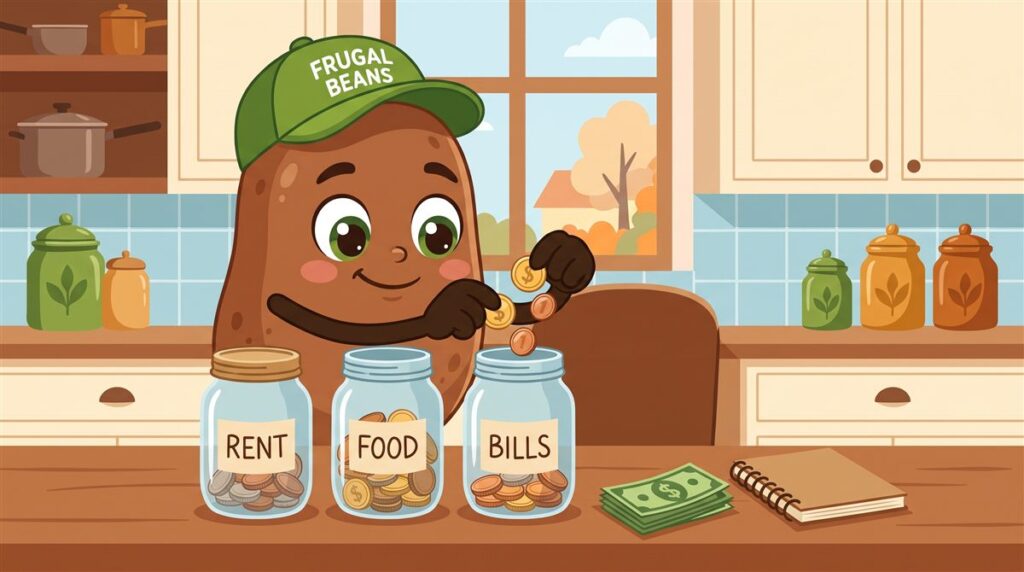
Occasional expenses are what break a tight budget, because they do not show up every month. Create a sinking fund, which is money set aside gradually for a known future cost. If a $600 insurance bill is due in six months, save $100 per month. The bill stops being a surprise and becomes part of the plan. Physical envelopes or labeled jars work for some households; separate savings labels in one account work for others.
|
Expense type |
Examples |
Tight budget approach |
|
Fixed |
Rent, loan payment, internet plan |
Pay first; renegotiate or shop around at renewal |
|
Flexible |
Groceries, fuel, dining out |
Set a range and check it weekly |
|
Occasional |
Repairs, gifts, annual fees |
Divide the cost by the months until it is due |
|
Irregular income |
Overtime, gig work, seasonal pay |
Cover the bare-bones budget from dependable income; assign extras on purpose |
5. Give Every Dollar a Job (Including a Little Fun)
A zero-based budget assigns a planned use to all expected income. “Zero-based” does not mean your bank account must reach zero. It means income minus planned spending, saving, and debt payments equals zero on paper. Unassigned money on a tight budget tends to vanish without a decision.
Still include a small amount for enjoyment. A modest allowance for coffee, a hobby, or a cheap night out keeps the plan livable. If the budget leaves no room for ordinary pleasures, you may follow it for a week and then abandon it completely. A planned $20 of personal spending is more useful than an unrealistic promise to spend nothing.
For couples or families, consider separate no-questions-asked amounts if that reduces friction. They do not need to be equal if incomes or responsibilities differ. What matters is agreeing on the system before the money is spent.
6. Automate Bills and Savings Without Risking Overdraft Fees
Automation moves money according to a decision you have already made. Schedule bills for the days right after payday, and set a small transfer to savings on payday too. Moving the money early keeps your goals from becoming “whatever is left at the end of the month.”
On a tight budget, timing matters as much as the amount. Start with a transfer you can sustain. If $75 per paycheck causes overdrafts, try $20 and increase it after two or three successful months. Keep a small cushion in checking for timing differences, because a payment that lands a day before your paycheck can trigger a fee.
Protect yourself from overdraft and late fees
- Ask your billers whether you can move due dates closer to payday. Some will.
- Turn on low-balance alerts in your banking app.
- Review whether you have opted in to overdraft coverage for debit card purchases. The Consumer Financial Protection Bureau explains how bank account fees and overdraft coverage work and what your choices are.
- If you know a payment will be late, call before the due date. Providers often have more options before an account falls behind.
Paying on time also protects your credit history, which affects what you pay for loans, insurance, and even some rentals. The CFPB’s guide to credit reports and scores explains how to check your reports for free and dispute errors.
7. Build a Small Emergency Buffer, Even on a Tight Budget
An emergency fund is cash reserved for an unexpected, necessary expense, such as a broken water heater, a cut in hours, or an urgent car repair. It is different from money for planned costs. A birthday gift is not an emergency, even if it was forgotten until the last minute.
When you are trying to save money on a tight budget, the first milestone can be very small: $100, then $300, then $500. Even $10 a week adds up to $520 over a year. Once that first buffer is in place, consider building toward several weeks or months of bare-bones expenses. The right long-term amount depends on income stability, health needs, dependents, and other support you can count on.
Keep emergency money in a safe account you can reach quickly but do not see every time you buy groceries. The main benefit is not earning the highest return. It is having an alternative to a payday loan or a high-interest card when life goes wrong. If you own your home, our free Homeowner Repair Cost Playbook helps you estimate which repairs to plan for so the buffer is the right size.

8. Cut Fixed Costs: The Biggest Ways to Save Money on a Tight Budget
When a budget is tight, focus on the largest controllable costs first. Housing, transportation, insurance, phone plans, and debt interest usually matter more than eliminating every small treat. A $50 monthly cut to one fixed bill saves $600 a year, and it keeps saving without any extra effort from you.
Phone, internet, and insurance
Check whether a lower-cost plan would meet your needs, especially if you rarely use all your data or channels. Compare insurance at renewal rather than letting it roll over automatically. Ask your current providers whether they have a cheaper plan before you switch; sometimes a phone call is enough.
Subscriptions and automatic renewals
Review subscriptions together, at one sitting. Cancel what you no longer use, pause what you use seasonally, and ask whether a lower tier would do the same job. For larger costs, compare the full price over time rather than only the monthly payment. A small monthly charge can still be expensive when it runs for years.
Groceries and everyday spending on a tight budget
Groceries are flexible, not fixed, but they respond well to systems. Plan a few reliable meals, keep a short list, and compare unit prices on the shelf tag, which show the cost per ounce or per count. A bigger package is only a bargain if you will use all of it. If convenience meals are draining the budget, our look at whether meal delivery services are worth it walks through the real cost.

Change systems, not willpower
Set a waiting period for nonessential purchases. A 48-hour pause can separate a genuine need from an impulse without forcing you to reject every want. Try a “replace, do not simply remove” approach: if takeout is the problem, keep one planned restaurant meal and prepare two quick alternatives at home. Practical substitutions last longer than shame. You will find more ideas like these in our list of simple ways to save money.
9. Hold a 15-Minute Tight Budget Check-In Each Week
A budget is a living plan, so check it before the month is over. Set aside 15 minutes once a week to review account balances, upcoming bills, recent spending, and progress toward your goal. That is long enough to catch problems and short enough to repeat.
Ask three questions: What has changed? What must be paid before the next check-in? What adjustment protects the most important goal? You might move $15 from entertainment to the car-repair fund, postpone a purchase, or simply confirm that everything is on track. On a tight budget, the weekly check-in is where overdrafts get prevented instead of discovered.
10. Plan for Irregular Income, Windfalls and Hard Months
If your pay varies, build the bare-bones budget around your lowest typical month. In better months, assign the extra on purpose: first to any bill that is behind, then to the emergency buffer, then to a sinking fund. Some households park extra income in a holding account and “pay themselves” a steady amount each month, which smooths out the ups and downs.
A windfall is money above your normal income, such as a tax refund, bonus, gift, or unusually strong freelance month. Decide in advance how to divide it. For example, a $900 tax refund might add $500 to the emergency buffer, $250 to debt repayment, and $150 to something your family enjoys.
Difficult months need a plan too. Identify expenses that can pause or shrink temporarily, such as extra debt payments, travel, or optional subscriptions. Protect housing, utilities, food, transportation, insurance, minimum debt payments, and essential health costs first. A flexible budget is not a failed budget. It is a budget that tells you which choices to make when conditions change.
11. Review and Adjust Your Tight Budget Every Month
Set a monthly appointment with your budget. Compare planned amounts with actual spending, notice your progress, and update categories that no longer fit. A raise, a new child-care cost, a move, a medical bill, or a paid-off loan can change the whole picture.
Do not change ten categories at once. If groceries ran over again, first ask whether the amount was unrealistic, prices changed, or meal planning needs attention. Then make one specific adjustment and watch the result. Small corrections compound over time.
A 5-Step Plan to Save Money on a Tight Budget
If the 11 budgeting tips feel like a lot, start with this short version. It mirrors the infographic and fits on a sticky note on the fridge.
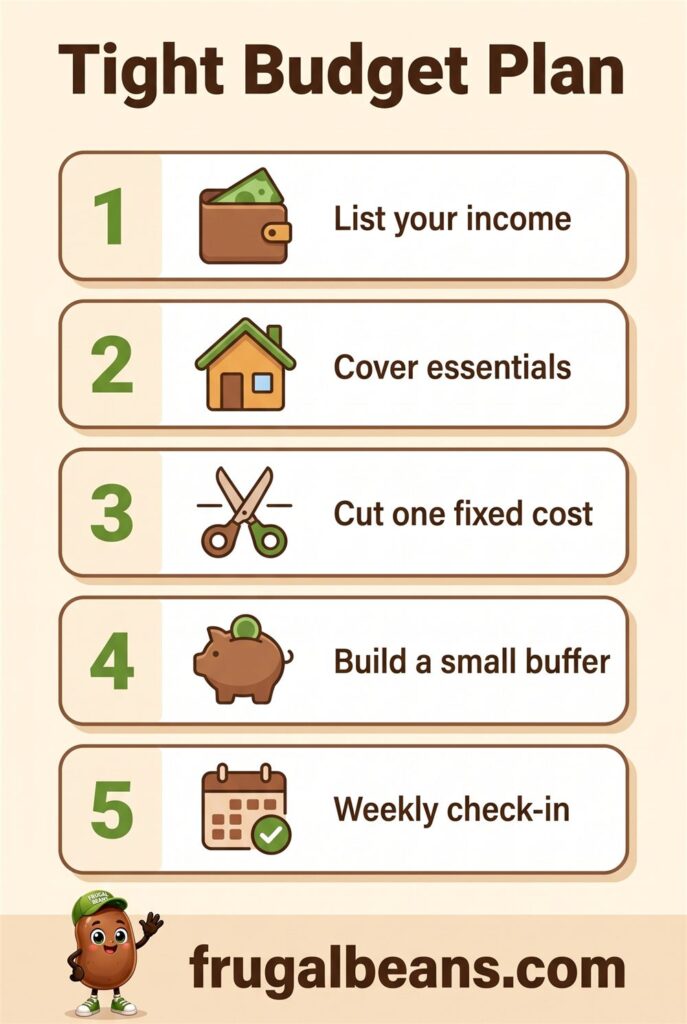
- List your income. Write down take-home pay for the month, using a cautious figure if it varies.
- Cover essentials. Fill in the bare-bones budget: housing, utilities, food, transportation, minimum payments, and health needs.
- Cut one fixed cost. Call one provider this week, such as your phone, internet, or insurance company, and ask for a lower plan.
- Build a small buffer. Automate a transfer you can sustain, even $10 a week, until you reach your first milestone.
- Hold a weekly check-in. Spend 15 minutes reviewing balances and upcoming bills so nothing catches you off guard.
More Ways to Save Money on a Tight Budget Without Feeling Deprived
The budgeting tips that last are the ones that are easy to see and easy to repeat. Keep the system visible. A one-page budget on paper, a basic spreadsheet, or a notes app is enough if you will actually use it. Choose the tool that makes your numbers easy to understand, not the one with the most features.
Use separate labels or accounts for goals when possible. Seeing “car repairs” and “holiday gifts” as distinct balances makes it less likely you will spend one goal’s money on another. If separate accounts create fees or confusion, use clear categories in one account instead.
Budget with ranges when precision would be false. Groceries might be planned at $400 to $450, while rent may be exactly $1,200. A range reflects real variation while still giving you a boundary. At the end of the month, learn from where the result landed.
Look at the house itself, too. Food waste, energy use, and small repairs left too long are quiet leaks in a tight budget. Our guide to how to save money at home walks through each room, and these frugal living tips add everyday habits that cost nothing to start.
Finally, connect the budget to something meaningful. A paid-off credit card can mean less stress. A small buffer can mean sleeping through the night when the car makes a strange noise. The budget is not the destination; it is the way everyday decisions support the life you want.
Ways to Save Money on a Tight Budget: Frequently Asked Questions
What are the best ways to save money on a tight budget?
Start with the biggest, most repeatable savings: lower one fixed bill, avoid overdraft and late fees by lining up due dates with payday, and plan simple meals so groceries stay predictable. Then automate a small transfer to an emergency buffer. These changes save more than cutting tiny treats.
How much should I save if I live on a tight budget?
Any consistent amount counts. Start with what you can sustain without overdrawing your account, even $5 or $10 a week, and increase it after a few successful months. Ten dollars a week becomes $520 over a year, which is a real cushion for a minor emergency.
Is a budget still useful if my income changes every month?
Yes, and it may be even more useful. Build the bare-bones budget on your lowest typical month, cover essentials from dependable income, and assign extra income on purpose when it arrives. A holding account that pays you a steady amount each month can smooth out the swings.
How do I avoid overdraft fees on a tight budget?
Keep a small cushion in checking, turn on low-balance alerts, schedule bills right after payday, and review your overdraft coverage choices with your bank. A weekly check-in helps you spot a shortfall before a payment goes through.
The Bottom Line
Budgeting on less works best when it is specific, flexible, and connected to your priorities. Name one small goal, build a bare-bones budget from take-home pay, track real spending, and plan for both regular and occasional costs. Then automate what matters, protect a small emergency buffer, cut one fixed cost at a time, and check in weekly.
You do not need to follow all 11 budgeting tips at once, and you do not need to get every category right on the first try. The most reliable ways to save money on a tight budget are the ones you can repeat. Give your money clear jobs, leave room for ordinary enjoyment, and let each month move you a little closer to breathing room.
Leave a Reply

Get the free Homeowner Repair Cost Playbook
Which systems fail first, what they cost, the warning signs, and the repair-or-replace rule. 15 printable pages.
Free. No spam.
Free tool
Repair or replace?
Got a quote for your furnace, AC, water heater or an appliance? Check it in under a minute.
Free tool
What needs replacing next?
Enter the install years for your furnace, AC, water heater and appliances. See what is due first and what to save each month.
2 Responses to Ways to Save Money on a Tight Budget: 11 Smart Budgeting Tips