Flipping for Profit: 15 Simple Steps to Start Reselling

Flipping for profit means buying an item for less than its realistic resale value, then cleaning, presenting, and selling it for more. The difference can become profit, but only after you subtract every cost and count your time. A person might flip a used lamp, a bicycle, a set of tools, a piece of furniture, or a collectible. It can begin with a few dollars from a closet cleanout, and it becomes a small business when you buy inventory regularly and sell with a plan.
For an ordinary household, reselling works best as a controlled experiment, not a promise of quick money. You do not need a warehouse, a business degree, or a big starting budget. You do need patience, honest math, safe buying habits, and enough space to keep unsold items from taking over your home.
A good flip is not simply something bought cheaply. It is an item you understand, can sell to a buyer you can reach, and can move at a reasonable speed after all expenses. This guide walks through 15 simple steps: where to find items to flip, what tends to sell, how to price using sold listings, how to do the real profit math, how to stay safe, and what to know about taxes.
What Flipping for Profit Really Involves
Every flip has four parts: sourcing, preparation, selling, and delivery. Sourcing is finding inventory at yard sales, thrift stores, clearance shelves, local listings, auctions, or from people you know. Preparation covers cleaning, testing, repairing, photographing, measuring, and writing an honest description. Selling means choosing a marketplace, setting a price, answering questions, and negotiating. Delivery may involve packing and shipping, meeting locally, or arranging pickup.
The purchase price is only one line in the calculation. Other costs can include marketplace fees, payment processing, fuel, packing materials, replacement parts, cleaning supplies, storage, returns, and taxes. Your time matters too. If a $25 item leaves you $18 after expenses but takes three hours of searching, cleaning, messaging, and arranging pickup, it may not be a good use of an evening.
Three terms keep the picture clear:
- Revenue is the money the buyer pays you.
- Profit is what remains after all costs.
- Cash flow is the timing of money moving in and out.
A flip can be profitable on paper and still uncomfortable for a household if money sits tied up in inventory for months. That is why this flipping for profit plan starts with your budget, not with shopping.
Your 15-Step Plan for Flipping for Profit
The steps are grouped by stage, so you can read straight through or jump to the part you need. Steps 1 to 3 happen before you spend a dollar.
Step 1: Set a Starting Budget and an Inventory Cap
Use money your household can afford to leave tied up for a while. Do not use rent money, emergency savings, or borrowed money to buy inventory. A small starting fund, such as $50 to $200, is enough to learn the ropes. If money is tight right now, our guide to saving money on a tight budget can help you find that starter fund without squeezing essentials.
Then set a cap on unsold inventory, either in dollars or in physical space, such as “one shelf and one corner of the garage.” When you hit the cap, you sell before you buy anything else. This one rule prevents most of the clutter and cash problems that sink people who are new to reselling.
Step 2: Choose a Lane Before You Buy
Beginners often lose money by treating every cheap object as an opportunity. A category, or lane, gives you a way to recognize quality, estimate demand, and spot problems quickly. Start with something you already understand or genuinely want to learn about.
Before choosing a lane, ask three questions:
- Can you inspect the item well enough to find common defects?
- Can you estimate a selling price from recent, completed sales rather than hopeful listings?
- Can you store, transport, clean, and ship it without excessive effort?
Narrow beats broad. Instead of “all furniture,” you might start with solid-wood side tables that fit in your car. Instead of “electronics,” you might focus on one type of audio equipment you know how to test. Specialization builds pattern recognition: you learn which makers hold value, which flaws are expensive, and which questions buyers always ask.
Step 3: Learn to Research Sold Listings
Pricing research is the skill that separates reselling from guessing. Current listings show what sellers hope to get. Completed or sold listings show what buyers actually paid. Many online marketplaces let you filter search results to sold items; use that filter every time it exists.
When you compare, match the details: condition, size, color, maker, included accessories, and location. Look at several recent sales, not one outlier. Then take a conservative number from the middle or lower part of that range. That number, not the highest price you have ever seen, is what goes into your profit math.
Practice before you buy any items to flip. Pick ten objects in your home and look up what similar items sold for. You will quickly see which categories move and which sit unsold.
Where to Find Items to Flip
Steps 4 to 6 cover sourcing. The best places to find items to flip are usually local, because you can inspect before paying and avoid shipping costs on the way in.

Step 4: Start With Your Own Clutter
Your closets, garage, and basement are the cheapest inventory source you will ever have, because the purchase price is already paid. Selling things you no longer use is a low-risk way to practice reselling: photographing, listing, and shipping with almost no money at stake. It also clears space for future inventory.
Make three piles: sell, donate, and keep. Be honest about the sell pile; an item worth a few dollars may not justify the time to list it. Decluttering this way pairs well with the habits in our frugal living tips, since owning less makes it easier to see what you already have.
Step 5: Shop Garage Sales, Yard Sales, and Estate Sales
Garage and yard sales often offer the lowest prices, and sellers are usually happy to bundle items or lower the price late in the day. Estate sales can have whole households of goods, including older tools, kitchenware, and furniture. Bring small bills, a tape measure, a flashlight, and a phone so you can check sold listings on the spot.
Be polite when negotiating. A fair offer on several items together often works better than haggling hard over one. And remember your lane when hunting for items to flip: a bargain outside your category is only a bargain if you know how to sell it.
Step 6: Check Thrift Stores, Clearance Shelves, and Curb Finds
Thrift stores provide steady chances to flip items for profit because new items arrive constantly. Learn which days your local stores restock, and visit regularly rather than making one long trip. Retail clearance shelves can also turn up new, boxed items, though margins there tend to be thinner.
Curbside finds can be free inventory, but follow local rules and only take items clearly left out for collection. Inspect them closely for damage, pests, and moisture before bringing them inside. Online local listings are convenient too, but a low price can disappear after a long drive, so ask for measurements, working status, missing parts, and clear photos before making a trip.
What Sells: Choosing Items to Flip
No category is automatically easy, but some types of items to flip tend to be practical for beginners because they are common, easy to inspect, and easy to move. The point is not that every item in these categories is valuable. The point is that you can learn them quickly.
Step 7: Inspect Before You Buy, and Know What to Avoid
Categories many resellers start with include:
- Furniture: solid-wood pieces that clean up well and fit in a car.
- Tools and outdoor equipment: hand tools, power tools you can test, and garden gear.
- Kitchenware: durable cookware, small appliances that work, and complete sets.
- Sporting goods and bikes: items people want seasonally.
- Clothing and shoes: clean, well-made pieces in good condition.
- Books, media, and hobby supplies: easy to store and ship, though value varies widely.
- Home decor and lighting: lamps, mirrors, and frames with broad appeal.
Whatever the category, inspect before paying. Check for pests, mold, strong odors, cracks, missing parts, and water damage. For electrical goods, look at cords and plugs, and test only in a safe way. Ask yourself whether you could describe every flaw in a listing.
Some categories are best avoided until you have real expertise. Counterfeit-prone luxury goods, safety-critical equipment such as car seats and helmets, recalled products, and complex electronics can create losses or liability. Never resell an item that is unsafe just because someone might pay for it. You can always expand later, after your records show your first lane is working.
Run the Numbers Before Flipping for Profit
Step 8 is the heart of the whole process. In flipping for profit, real profit is what is left after every cost, and the only way to know it is to write the numbers down before you buy.
Step 8: Do the True Profit Math
Use this simple formula:
Expected profit = conservative sale price − purchase price − selling fees − shipping − supplies and repairs − transport − a reserve for surprises.
Here is an illustrative example. The numbers below are made up to show the method; your fees, prices, and costs will differ. Suppose you find a wooden side table for $18 and recent sold listings suggest you could sell it for about $85 locally. You expect to spend $9 on sandpaper and finish, $4 in fuel, and you estimate $11 for marketplace and payment costs (check the current fee page of whichever platform you use). You add an $8 reserve for surprises.
|
Line item (illustrative) |
Amount |
|
Conservative sale price |
$85 |
|
Purchase price |
-$18 |
|
Marketplace and payment costs |
-$11 |
|
Cleaning and refinishing supplies |
-$9 |
|
Transport (fuel) |
-$4 |
|
Reserve for surprises |
-$8 |
|
Estimated profit before time |
$35 |
Now add your time. If the table takes three hours in total, from the trip to the final handoff, that $35 works out to about $11.67 per hour. Whether that is worth it is your call, but you should make it knowingly. If the table needs an unexpected $30 repair, the reserve is used up and the profit drops to $13 ($85 minus $18, $11, $9, $4, and $30). That second outcome is why inspection and a safety margin matter.
Shipping changes the picture fast. Imagine a second illustrative flip: a lamp bought for $8 that sells for $40. If you assume $6 in fees, pay $14 to ship it, and spend $3 on a box and padding, you keep $9. If it took an hour and a half to clean, photograph, list, and pack, that is $6 per hour. Small, heavy, or fragile items can look great until shipping is counted.
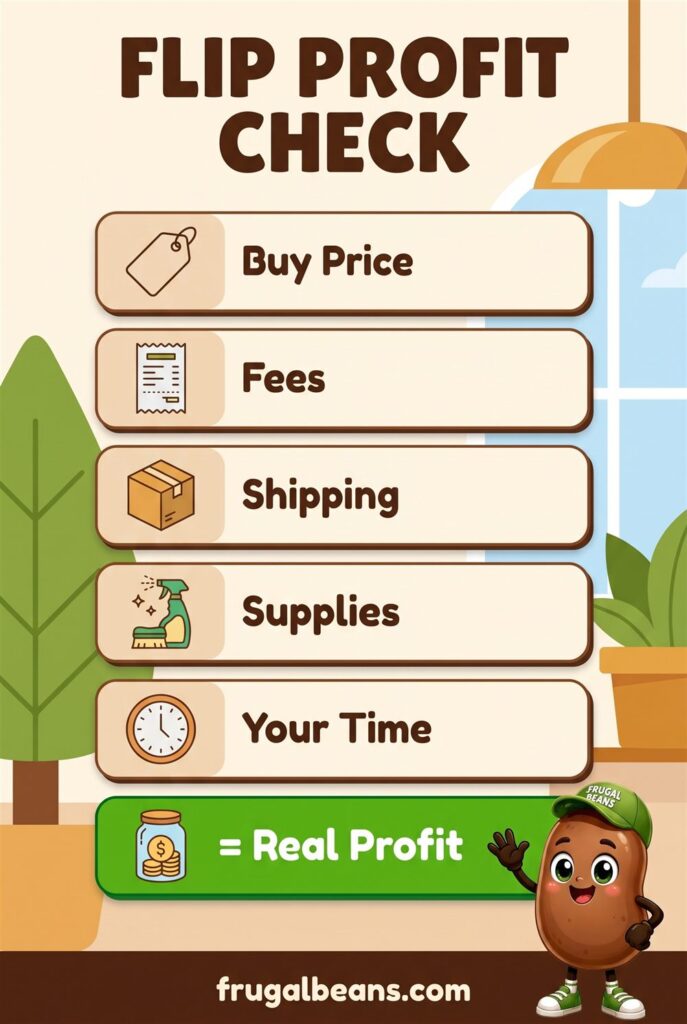
A beginner-friendly rule: buy only when the deal still looks worthwhile if the item sells for less than you hoped or takes longer to sell. The reserve is not a guaranteed expense; it is a reminder that used goods rarely behave perfectly. If the deal does not work after a reasonable reserve, pass. Another item will come along.
How to Flip Items for Profit: Prep, Photos, and Pricing
Steps 9 to 11 turn a purchase into a listing that sells. This is where you flip items for profit instead of just moving them from one garage to another.
Step 9: Clean, Test, and Repair Honestly
Preparation should make the item easier and safer to buy, not hide its history. Clean it in a way that suits the material. Test every function you advertise. Replace inexpensive missing hardware when it makes sense, and keep the receipt.
If you repair a flaw, say so in the listing. If a defect remains, photograph it clearly and describe it. Avoid projects with vague repair needs; “probably an easy fix” is not a cost estimate. The basic repair skills in our guide to saving money at home carry over well to small fixes on resale items.
Step 10: Photograph and Write a Clear Listing
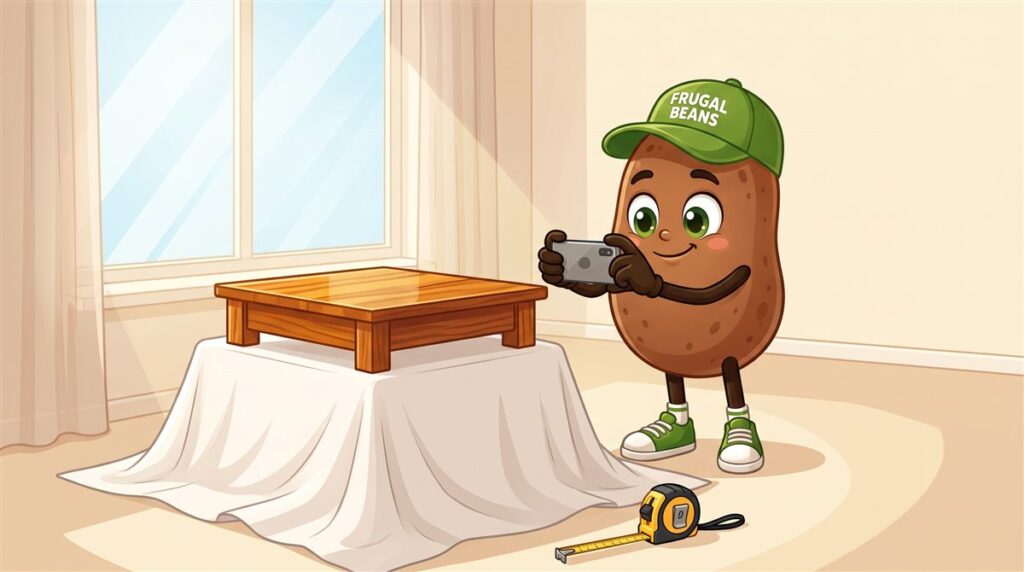
Good presentation builds both price and trust. Take photos in natural light against a plain, uncluttered background, such as a white sheet or a clean wall. Include the front, back, sides, labels, measurements, accessories, and any flaws. Photographing flaws first is a good habit; it keeps you honest and helps you price realistically.
Write a title that says what the item is, its most useful feature, and its condition. “Solid oak two-drawer side table, refinished, 24-inch wide” tells a buyer far more than “Nice table.” In the description, list dimensions, materials, what works, what does not, and how pickup or shipping will work. Accurate measurements prevent wasted conversations and costly returns.
Step 11: Price With a Three-Level Plan
Use your sold-listings research to set three numbers:
- Asking price: leaves room for normal negotiation.
- Target price: the amount you hope to receive.
- Floor price: the lowest amount that still protects your estimated profit.
If an item gets no serious interest after a reasonable period, review the photos, description, price, and marketplace before assuming buyers are wrong. Speed matters. Inventory sitting in a hallway is using space and cash. A $25 profit in two weeks can be more useful than a possible $50 profit after six months. Resellers call this inventory turnover: how quickly you convert purchases back into cash. For household reselling, reliable turnover usually matters more than one impressive win.
Sell, Ship, and Stay Safe While Reselling
Steps 12 and 13 cover getting the item to its buyer and protecting yourself along the way.
Step 12: Choose Where to Sell, and Ship Carefully
When you flip items for profit, you have several types of outlets, each with tradeoffs:
- Local classifieds and community marketplaces: good for bulky items like furniture; no shipping, but you handle meetups.
- National online marketplaces: a bigger audience, but you pay fees and handle shipping and returns.
- Consignment and resale shops: less work for you, but you keep a smaller share and wait longer to be paid.
- Your own yard sale: a fast way to clear lower-value items in one day.
Fees, payment holds, and return rules differ by platform and change over time, so read each marketplace’s current fee page and seller rules before you list. Do not rely on a fee you remember from last year.

When you ship, weigh and measure the packed box before you set the price, so the shipping cost is already in your math. Use a sturdy box, plenty of padding, and tape every seam. Ship promptly, keep the tracking number, and photograph fragile items as you pack them in case a damage claim comes up.
Step 13: Stay Safe and Spot Scams
Safety is part of the financial plan. For local sales, meet in a busy public place during the day when possible, bring someone along or tell someone where you are going, and avoid deals that feel rushed or secretive. Some police stations offer a designated exchange spot; it is worth asking yours.
Watch for common warning signs:
- A buyer offers to pay more than your asking price and asks you to send back the difference.
- Someone asks you to share a verification code sent to your phone.
- A buyer wants to move the conversation or payment off the platform you listed on.
- You receive an email that claims to confirm payment, but the money is not in your account.
- A buyer pressures you to ship before payment has fully cleared.
When in doubt, slow down. A real buyer will wait while you confirm that payment has arrived. Losing one sale is far cheaper than losing both the item and the money.
Reselling Records and Taxes
Step 14 is the one many beginners skip, and it is the one that makes everything else measurable.
Step 14: Keep Records and Understand Taxes
Keep a simple record for every item: date bought, source, purchase price, supplies, travel estimate, listing date, sale price, fees, shipping, and final profit. Add the hours you spent if you want your effective hourly rate. A notebook or spreadsheet is enough. Keep receipts with your notes, because rebuilding costs months later is hard.
In the U.S., income from reselling may be taxable, and payment apps and online marketplaces may send you a Form 1099-K. According to the IRS page Understanding your Form 1099-K (last reviewed June 28, 2026, and checked October 2026), these platforms must report payments for goods or services when they exceed $20,000 in more than 200 transactions, and you may receive a form even below that threshold. The same page says you must still report income on your tax return whether or not you receive the form.
Tax treatment depends on your situation, such as whether you are selling personal belongings or running a regular resale activity. Rules can change, so check current IRS guidance or ask a qualified tax professional. Do not assume that a missing form means no tax is owed. Good records make filing easier and show your actual profit, not just your deposits.
Build a Repeatable Reselling Routine
The final step keeps flipping for profit from becoming an exhausting pile of half-finished projects.
Step 15: Review, Adjust, and Repeat
When an item enters your home, give it a status: to inspect, to clean, ready to list, listed, sold, or ready to deliver. Set one weekly time block for photos and listings, and another for packing, messages, and bookkeeping. Review unsold inventory every week: improve the listing, lower the price, move it to another outlet, or donate it.
Keep a small kit nearby: a tape measure, a scale, cleaning cloths, suitable boxes, labels, basic tools, a flashlight, and your record book. Add your own price history and a list of trusted repair contacts. The point is not to buy every gadget; it is to make inspection, preparation, and decisions consistent.
A few more practical tips for flipping for profit:
- Start with items you can test. Working knowledge is worth more than a bargain price.
- Buy one before buying a lot. A single test item can reveal hidden fees, weak demand, or a difficult shipping process.
- Offer bundles when it makes sense. Related low-value items often sell faster together.
- Protect your reputation. Prompt replies and accurate descriptions can be worth more than a few extra dollars.
- Give profits a job. Decide in advance how much goes back into inventory and how much goes to savings or debt.
That last point matters. Reselling income is most useful when it supports your bigger goals, whether that is an emergency fund or paying down a balance. Our list of ways to save money has ideas for where that extra cash can do the most good, and frugal living for beginners covers building the habits around it.
Flipping for Profit: Frequently Asked Questions
How much money do I need to start flipping for profit?
Very little. Many people start by selling things they already own, which costs nothing. After that, a small fund such as $50 to $200 is enough to learn. Use only money you can afford to have tied up for a while, never rent or emergency savings.
What are the best items to flip for beginners?
The best items to flip are ones you can inspect, test, and price confidently. Common starting categories include furniture, tools, kitchenware, sporting goods, clothing, and home decor. Pick one narrow lane, research sold listings, and expand only after your records show it is working.
Is reselling income taxable?
It can be. The IRS says you must report income on your tax return even if you do not get a Form 1099-K, and payment platforms may send one. How your sales are treated depends on your situation, so check current IRS guidance or talk with a tax professional, and keep records from day one.
How do I know if a flip is worth it?
Write down a conservative sale price based on sold listings, then subtract the purchase price, fees, shipping, supplies, transport, and a small reserve. Divide what is left by the hours you expect to spend. If the result still looks worthwhile at a lower sale price, it is probably a reasonable flip.
The Bottom Line
Flipping for profit is a practical way to build a small side income, but it rewards discipline more than excitement. Choose a manageable lane, inspect before buying, price from sold listings, and count every cost, including your time. Add value through cleaning and clear information, stay alert to scams, and keep records from the start.
Your first goal should not be a dramatic score. It should be a repeatable process that leaves you with more money, more knowledge, and no regret about the purchase. Start small, learn from ordinary, everyday items to flip, and let your records guide what you buy next. When the numbers and the routine both make sense, reselling can become a useful, flexible part of your household’s financial plan.
Get the free Homeowner Repair Cost Playbook
Which systems fail first, what they cost, the warning signs, and the repair-or-replace rule. 15 printable pages.
Free. No spam.
Free tool
Repair or replace?
Got a quote for your furnace, AC, water heater or an appliance? Check it in under a minute.
Free tool
What needs replacing next?
Enter the install years for your furnace, AC, water heater and appliances. See what is due first and what to save each month.
Leave a Reply