Home Maintenance Checklist: Free Monthly and Seasonal Calendar
A home maintenance checklist is the cheapest repair plan there is. Changing a filter, testing an alarm or draining a little sediment from the water heater takes minutes, and it helps your furnace, air conditioner and water heater reach the end of their expected lives instead of failing early. The problem is remembering what to do and when. This free home maintenance checklist tool builds a 12-month calendar from the systems in your own home and your climate, with each task’s timing taken from ENERGY STAR, the U.S. Fire Administration, the Department of Energy and the EPA wherever they give one.
Loading the home maintenance calendar… If it doesn’t appear, please make sure JavaScript is turned on.
How the Home Maintenance Checklist Tool Works
- Describe your home. Pick your main heating (gas furnace, oil, heat pump, boiler or electric), whether you have central air, your water heater type and your climate.
- Add your safety alarms. Choose your smoke alarm type and enter the year printed on the oldest one, so the checklist can tell you when it is due for replacement.
- Tick what else your home has, such as a fireplace, gutters, a clothes dryer, a sump pump, a sprinkler system, a septic system or a private well.
- Build the calendar. You get the habits to do every month, a card for each of the next 12 months starting with this one, and a list of the jobs that come round every few years.
Tick each task as you finish it; your ticks are saved in your own browser, so you can come back to your home maintenance checklist all year. Click “Print the calendar” for a paper copy for the fridge, or “Add to my calendar” to download a file that puts a reminder on the first Saturday of each month in Google Calendar, Apple Calendar or Outlook. Nothing is sent to Frugal Beans.
Why a Home Maintenance Checklist Saves Money
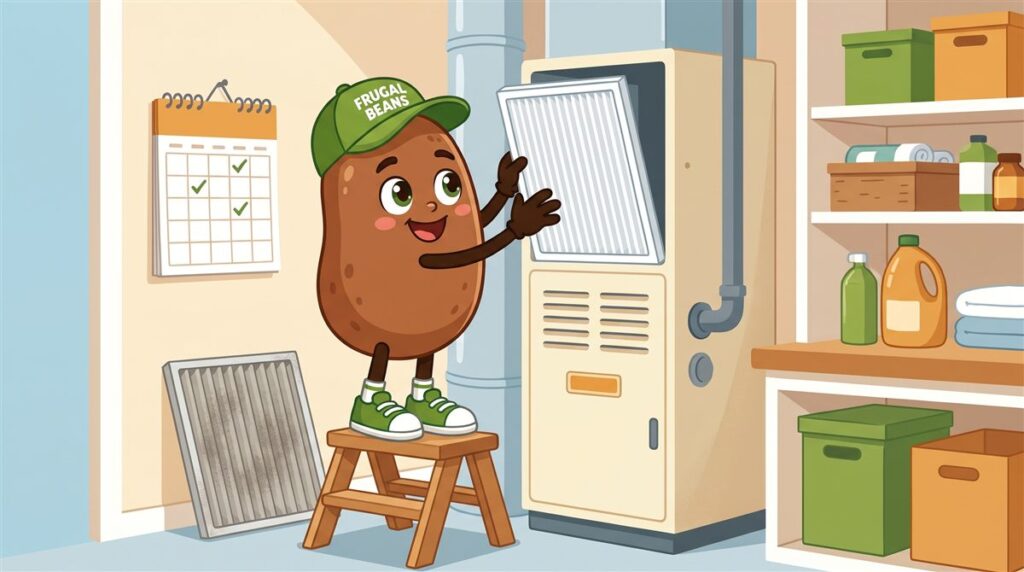
Most big home repair bills start as small, cheap problems. A clogged air filter makes the blower work harder. Sediment in a water heater tank wastes energy and can shorten the tank’s life. A blocked dryer vent is a fire risk. A gutter that overflows every spring can rot the trim and soak the foundation. A home maintenance checklist turns all of those into five-minute jobs on a schedule.
Maintenance won’t stop a 20-year-old furnace from wearing out, but it helps each system reach its typical lifespan, and it lets you spot a problem while it is still a repair instead of a replacement. That is the same idea behind our free home system lifespan tracker: know what is coming, then plan for it.
Monthly Home Maintenance Checklist
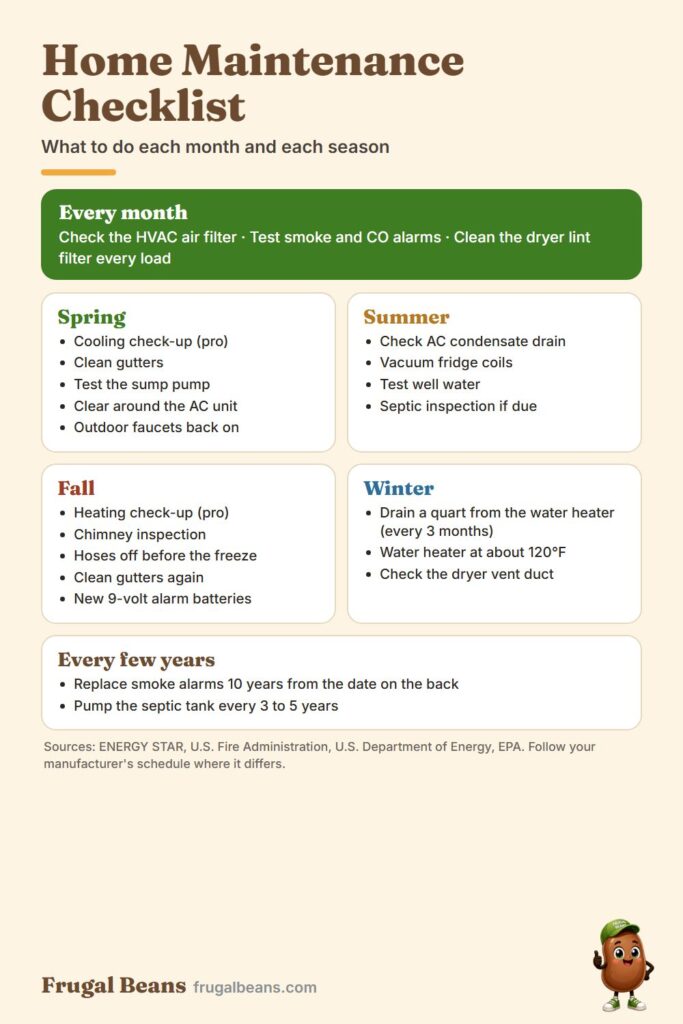
A few habits belong on every home maintenance checklist every month:
- Check the HVAC air filter. ENERGY STAR recommends inspecting, cleaning or changing the air filter on your central air conditioner, furnace or heat pump once a month. A dirty filter slows airflow and makes the system work harder. Change it at least every three months, and more often in heavy-use seasons or with pets.
- Test smoke alarms. The U.S. Fire Administration says to test smoke alarms every month with the test button. Test carbon monoxide alarms at the same time.
- Clean the dryer lint filter every load. The U.S. Fire Administration advises cleaning the lint filter before or after each cycle. It is not a monthly job, but it belongs on the list.
Seasonal Home Maintenance Checklist
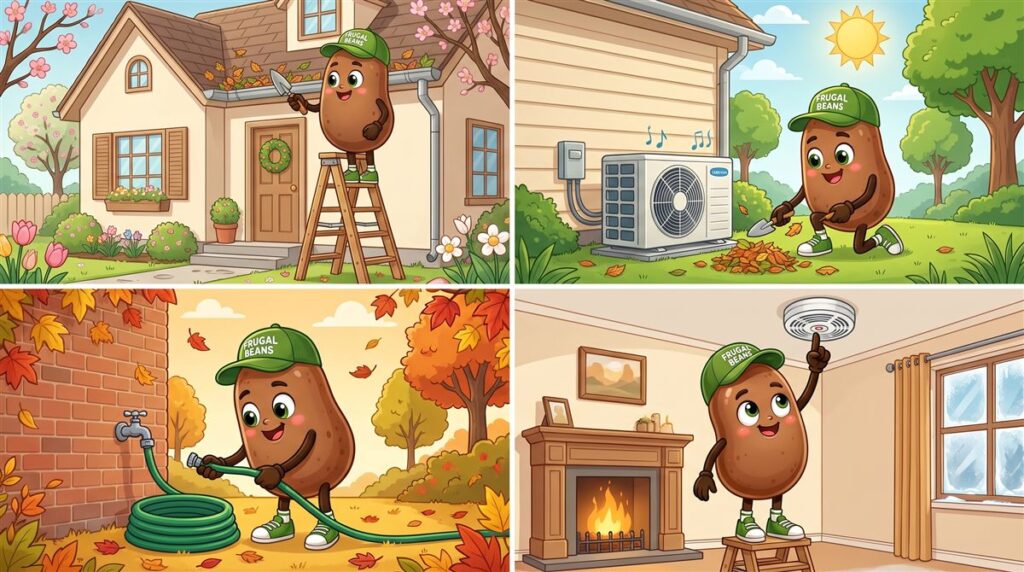
The rest of a home maintenance checklist follows the seasons. The tool places each task in the right month for your climate; here is the general pattern.
Spring home maintenance checklist
- Book the cooling check-up. ENERGY STAR recommends having your cooling system checked by a contractor in spring, before the cooling season. The tool schedules it in March for hot climates and April elsewhere.
- Clear around the outdoor AC unit so leaves and debris don’t block airflow.
- Clean gutters and check that downspouts carry water away from the house.
- Test the sump pump before the rainy season by pouring water into the pit.
- Turn outdoor faucets back on in cold climates and check for leaks from winter freezing.
- Walk around the outside and look at the roof, siding, caulk and grading after winter.
Summer home maintenance checklist
- Check the AC condensate drain line. ENERGY STAR lists the condensate drain among the items to inspect, because a clogged drain can cause water damage.
- Vacuum the refrigerator condenser coils as your manual describes.
- Test well water if you have a private well. The EPA recommends testing every year for bacteria, nitrates, dissolved solids and pH, and nitrate levels tend to be highest between April and July.
- Book a septic inspection if one is due. The EPA says a septic tank should generally be inspected every one to three years.
Fall home maintenance checklist
- Book the heating check-up. ENERGY STAR recommends having the heating system checked in fall, before the heating season, including gas or oil connections, burner combustion and the heat exchanger. The tool schedules it in September for cold climates and October elsewhere.
- Have the chimney inspected. The U.S. Fire Administration recommends having heating equipment and chimneys cleaned and inspected each year by a professional.
- Disconnect hoses and shut off outdoor faucets before the first freeze, and winterize any sprinkler system.
- Clean gutters once the leaves have fallen.
- Replace 9-volt smoke alarm batteries. The U.S. Fire Administration says to replace them at least once a year; the fall clock change is an easy reminder.
Winter home maintenance checklist
- Drain sediment from the water heater. The Department of Energy’s Energy Saver guide suggests draining about a quart of water from a tank water heater every three months to remove sediment. The tool spreads that across January, April, July and October.
- Check the water heater temperature. Energy Saver recommends about 120°F for most households.
- Check the dryer vent duct and the outdoor flap, and clear out lint or book a vent cleaning. The U.S. Fire Administration advises checking that the venting isn’t damaged or restricted.
- Flush or descale a tankless water heater as the manual describes.
The Every-Few-Years Home Maintenance Checklist
Some jobs don’t come round every year, which makes them the easiest to forget. The tool lists them separately and flags any that look overdue:
- Replace smoke alarms every 10 years. The U.S. Fire Administration says smoke alarms need replacing 10 years from the manufacture date printed on the back. Enter the year on your oldest alarm and the home maintenance checklist marks it “Due” when it reaches 10 years.
- Pump the septic tank every three to five years. The EPA says pumping frequency depends on the tank size, the number of people in the household and how much water you use. Enter the year it was last pumped to see whether it is coming due.
- Test well water for radionuclides every three years, as the EPA recommends.
- Replace carbon monoxide alarms when the manufacturer says; the date is usually printed on the back.
Home Maintenance Checklist by System
If you’d rather think system by system, here is the same home maintenance checklist grouped by what it protects.
Heating and cooling
Check the filter monthly, book a cooling check-up in spring and a heating check-up in fall, keep the outdoor unit clear, and check the condensate drain. ENERGY STAR’s list of what a contractor’s check-up should include covers thermostat settings, electrical connections, lubrication, the condensate drain, system controls, the coils and refrigerant level for cooling, and gas or oil connections and the heat exchanger for heating. If a technician finds a problem, our repair or replace calculator helps you decide what to do with the quote.
Water heater
For a tank water heater, drain a quart every three months, check the temperature setting, and test the temperature-pressure relief valve the way the manual describes. Tankless units need periodic flushing or descaling, especially with hard water. When it is time to replace one, our water heater replacement cost estimator shows what a new one typically costs.
Safety alarms
Test monthly, replace 9-volt batteries yearly, and replace the whole alarm at 10 years. Sealed 10-year alarms can’t have their battery replaced; the whole unit is replaced on the manufacturer’s schedule.
Outside the house
Gutters in spring and fall, a walk around the roof, siding and caulk twice a year, and outdoor faucets and sprinklers before the first freeze in cold climates. These have no official federal interval, so the home maintenance checklist labels them “general practice.”
Septic and well
If you are on a septic system or a private well, nobody else monitors them for you. The EPA’s guidance is an inspection every one to three years and pumping every three to five years for septic systems, and a water test every year for private wells.
A Worked Example
Say you live somewhere with freezing winters, in a house with a gas furnace, central air, a tank water heater, 9-volt smoke alarms from 2014, a fireplace, gutters and a clothes dryer. Starting in October, the home maintenance checklist gives you:
- Every month: check the furnace filter, test the smoke and CO alarms, and clean the dryer lint filter every load.
- October: drain a quart from the water heater, test its relief valve, disconnect the garden hoses and walk around the outside.
- November: replace the 9-volt batteries and clean the gutters after the leaves fall.
- January: drain the water heater again and check it is set to about 120°F.
- February: check the dryer vent duct.
- April: book the AC check-up, clean the gutters, turn the outdoor faucets back on, clear around the outdoor unit and walk around the outside.
- August and September: chimney inspection, then the heating check-up.
And in the every-few-years list, the 2014 smoke alarms are marked “Due,” because they are past 10 years old.
A Home Maintenance Checklist for New Homeowners
If you have just moved in, you probably don’t know when anything was last serviced. Start with a one-time baseline before you follow the monthly home maintenance checklist:
- Find and label the shutoffs. Locate the main water shutoff, the gas shutoff and the electrical panel, and label the breakers. In an emergency, minutes matter.
- Read the labels and plates. Write down the model number and manufacture year of the furnace, air conditioner and water heater. The year tells you where each one sits in its expected life.
- Replace the air filter right away, and note the size so you can buy spares.
- Check every smoke alarm’s date. If any is more than 10 years old, or you can’t find a date, replace it.
- Book both check-ups in the first year, even off season, so a technician can tell you the condition of the heating and cooling systems.
- Ask about the septic system or well if the home has one, including when the tank was last pumped.
Once the baseline is done, enter those years in the tool and the home maintenance checklist takes it from there.
Keep a Maintenance Log
Every time you tick a task, keep the receipt or a quick note: the date, what was done, and who did it. A maintenance log has three practical benefits. Technicians can diagnose problems faster when they know the history. Many manufacturer warranties require proof of regular maintenance. And if you have a home warranty, missing maintenance records are a common reason claims are denied; our home warranty contract decoder shows what your contract requires. A folder, a notes app or the printed calendar from this tool all work. The best home maintenance checklist is the one you can show to someone else.
Renters and Condo Owners
If you rent, your landlord is usually responsible for the furnace, water heater and major repairs, but you can still keep the simple items on a home maintenance checklist: test the smoke alarms monthly, keep the filter clean if you have access to it, clean the dryer lint filter and report leaks or warning signs early. Condo owners typically handle what is inside their unit while the association handles the roof, exterior and shared systems, so check your HOA documents and trim the checklist to match.
DIY or Call a Professional?
Most of a home maintenance checklist is easy DIY: filters, alarm tests, gutters on a single-story house, hoses, lint and coils. Some jobs are for a professional: the heating and cooling check-ups, chimney inspections, septic inspections and pumping, and anything involving gas lines or electrical panels. Always follow the manufacturer’s instructions for your equipment; where your manual’s schedule differs from this home maintenance checklist, the manual wins.
What Maintenance Can’t Do
Maintenance makes systems last, but nothing lasts forever. Furnaces, air conditioners, water heaters and roofs all reach the end of their lives eventually. Pair your home maintenance checklist with a savings plan: the home repair fund calculator works out how much to set aside each month for the replacements ahead, so the next big bill is planned rather than a surprise.
Frequently Asked Questions
What should be on a home maintenance checklist?
At a minimum: monthly filter checks and smoke alarm tests, a cooling check-up in spring and a heating check-up in fall, water heater sediment draining, gutter cleaning, dryer vent checks, and smoke alarm replacement every 10 years. Add a fireplace, septic system, well or sump pump if your home has them.
How often should I change my furnace filter?
ENERGY STAR recommends checking it every month and changing it when it is dirty, and at least every three months. Homes with pets, allergies or heavy heating and cooling use usually need more frequent changes.
How often should a furnace or AC be serviced?
Once a year each, before the season it is used: the cooling system in spring and the heating system in fall, according to ENERGY STAR. A heat pump gets both.
How often should I flush my water heater?
The Department of Energy’s Energy Saver guide suggests draining about a quart of water from a tank every three months to remove sediment. Check your manual, since some manufacturers recommend a full flush once a year instead.
Can I add the home maintenance checklist to my phone?
Yes. Click “Add to my calendar (.ics)” and open the downloaded file. It adds a reminder on the first Saturday of each month, listing that month’s tasks, and it repeats every year.
Does the tool save my answers?
Your answers and ticks are saved only in your own browser. Nothing is sent to Frugal Beans. Use “Clear everything” to remove them.
The Bottom Line
A home maintenance checklist turns a long list of chores into a few minutes each month, and it is one of the simplest ways to make your home’s systems last. Build yours with the free tool above, print it or add it to your calendar, and tick it off as the year goes by. For typical repair costs, lifespans and a printable replacement ledger, get our free Homeowner Repair Cost Playbook, and see all of our free home repair tools.
Sources: HVAC filter and check-up guidance from ENERGY STAR; smoke alarm, chimney and dryer guidance from the U.S. Fire Administration; water heater draining and temperature from the U.S. Department of Energy’s Energy Saver guide; septic and private well guidance from the EPA (septic, wells). Tasks marked general practice have no official interval. Always follow your manufacturer’s instructions. This tool provides general information, not professional advice.

Get the free Homeowner Repair Cost Playbook
Which systems fail first, what they cost, the warning signs, and the repair-or-replace rule. 15 printable pages.
Free. No spam.
Free tools
Got a quote? Check it in under a minute.
Ballpark a new furnace before the contractor visits.
Price a tank, tankless or heat pump model.
Warm air, ice or noise? See the likely part and price.